

When to fly over Cape Town
The season tells you when the flights are busy. The wind tells you whether yours goes.
The season: November to March
Cape Town’s summer runs from November to March, and Cape Town Tourism calls January one of the city’s busiest months. That is when the weather is most reliable, when the operators fly their fullest schedules, and when you are most likely to be sharing the aircraft with strangers rather than having it to yourselves.
Outside those months flights still run. What changes is the frequency and how quickly a cancelled slot can be moved — in July a helicopter is easier to get and the light is lower, but the chance of a grounded day is higher.
The south-easter, or Cape Doctor
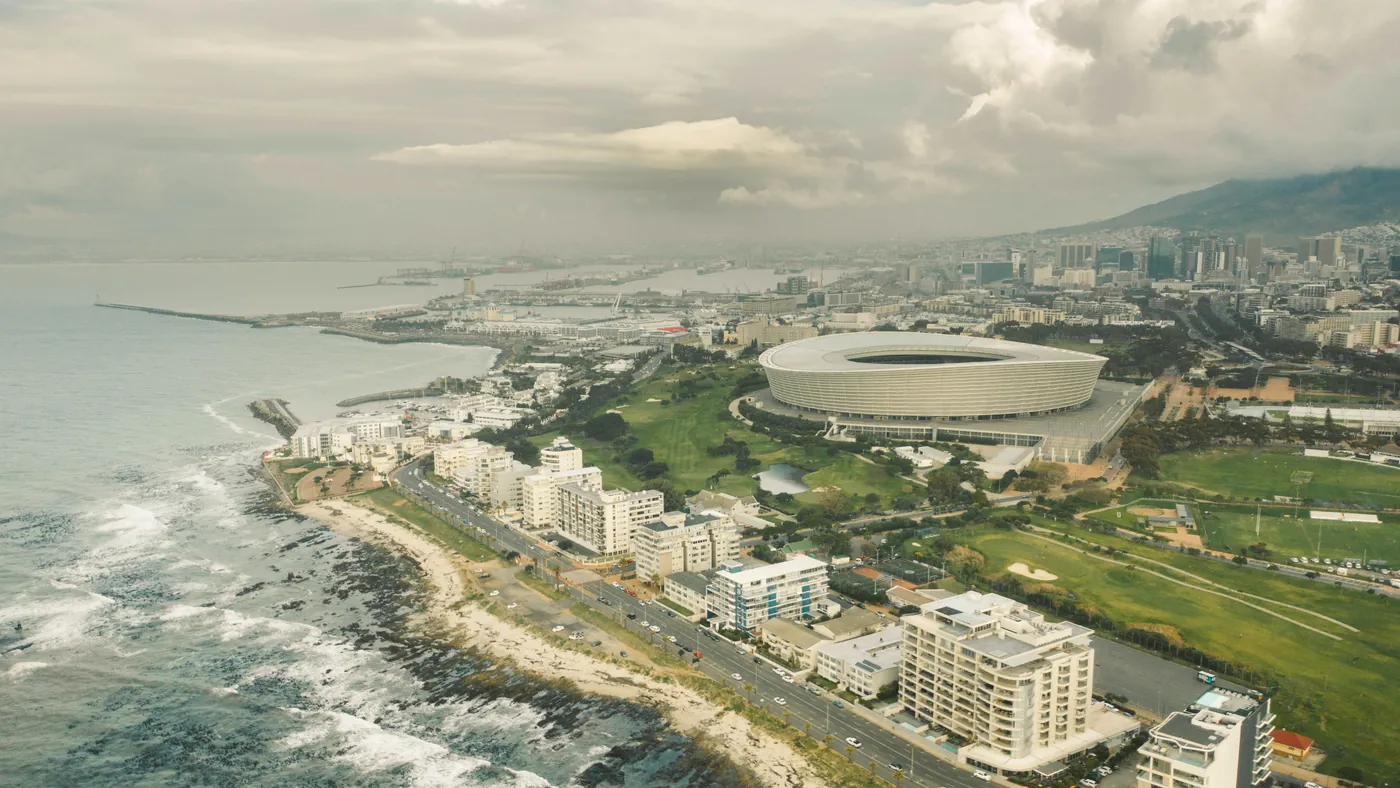
The wind that decides your flight is the south-easter, known locally as the Cape Doctor. It blows from late August into March and is at its strongest in November — the very start of the main season. It is the same wind that lays the cloud “tablecloth” over the top of Table Mountain, which is the most visible sign that it is working.
For a scenic flight the wind matters more than the season does. A clear December morning and a clear December afternoon are not the same proposition, because the south-easter typically builds through the day rather than at dawn.
Book the morning
Morning flights are the calmer ones. An early slot also leaves the rest of the day to rebook if the operator stands down — and every listing on this site cancels free up to 24 hours before departure, at all three operators and both booking sites, so moving an early booking costs nothing.
None of the operators publishes what happens when they cancel for weather on the day. That is worth asking at the desk rather than assuming, and it is one more reason to fly early in your stay rather than on the last morning.
What this means for the route you pick
The longer the route, the more weather it crosses. A twelve-minute flight stays over the city and the near coastline; the forty-two-to-fifty-minute Cape Point routes cross the peninsula to the Cape of Good Hope and back, and are the first to be shortened or stood down when the wind picks up on the far side.
See all six routes, their flight times and what each seller charges